Our top pick

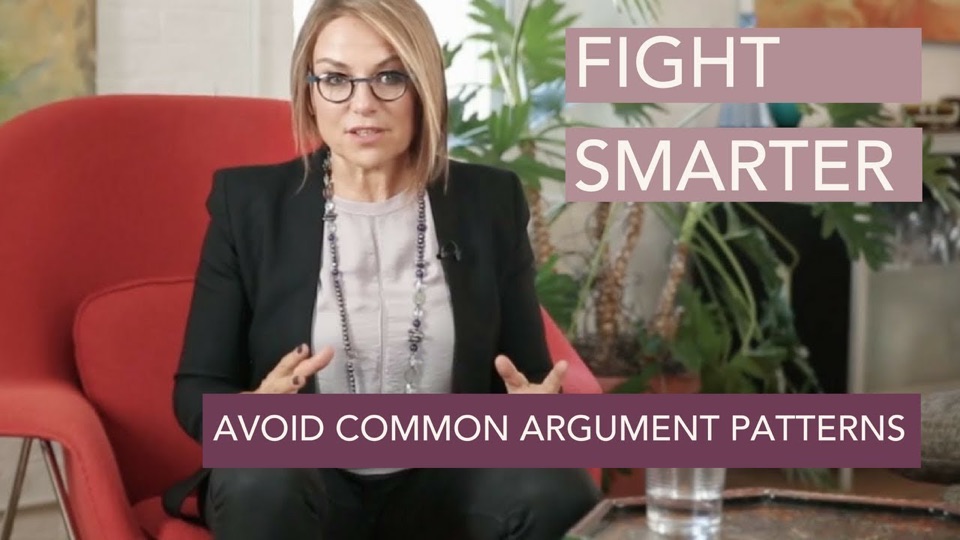
Fight Smarter: Avoid the Most Common Argument Patterns

Esther Perel, psychotherapist and author.

  • 1.7M views
  • 44K likes*
  • 7 min
Why this one first
It shows how an argument feeds itself: you explain your own slip by the day you had, and your partner's by who they are. Then what to say instead of "always" and "never".
What it’s not for
A full plan. It offers a few ways to approach an argument.

The video comes from YouTube, a Google service. When you press play, Google receives data and can use storage in your browser, including for its own purposes.

Watch

Videos

From three minutes to a long talk.

Orna Guralnik on Jay Shetty's podcast

Orna Guralnik, clinical psychologist, known from the series Couples Therapy.

  • 4.5M views
  • 64K likes*
  • 1 hr 42 min
What it’s for
Why "we just need to communicate better" is often not the real issue, and how to get out of blaming each other.
What it’s not for
A quick listen. It's a long conversation that covers a lot more than arguments.
Watch on YouTube

Two Sides of Stonewalling

The Gottman Institute, a couples research and training company.

  • 17K views
  • 332 likes*
  • 3 min
What it’s for
If you're the one who shuts down: what's going on, and how to ask for a break.
What it’s not for
Going deep. It's a short first look, under 3 minutes.
Watch on YouTube

Listen

Podcasts

For the drive, or when you can’t sleep.

We've Had This Fight Before

Marriage Therapy Radio. Zach Brittle, licensed therapist, in session with a long-married couple.

  • 4.6
  • 679 ratings*
  • 50 min
What it’s for
Hear a couple slow down the argument they keep having, and map it step by step.
What it’s not for
A general guide. It follows one couple's session, and the homework is made for two.
Listen

The Best Relationship Advice That Everyone Needs to Hear

The Mel Robbins Podcast, with researchers Julie and John Gottman.

  • 4.6
  • 14K ratings*
  • 1 hr 28 min
What it’s for
Why most of what couples struggle with keeps coming back, from the Gottmans' research.
What it’s not for
A quick answer. It's a long episode, about an hour and a half.
Listen

Good Relationships Need Better Fights

Where Should We Begin? Esther Perel, psychotherapist, with author Priya Parker.

  • 4.7
  • 15K ratings*
  • 58 min
What it’s for
The idea that you can be having the wrong argument, and what's underneath it.
What it’s not for
A quick overview. It's a 58-minute conversation about conflict.
Listen

Read

Books

If you want to take your time.

Hold Me Tight

Sue Johnson, clinical psychologist and developer of emotionally focused therapy.

  • 4.1
  • 24K ratings
  • 78% gave 4 or 5*
What it’s for
It names the loops couples get stuck in, including one pushing and one pulling away, with seven conversations to have together.
What it’s not for
A quick read. It's a book built around seven conversations.
See the book

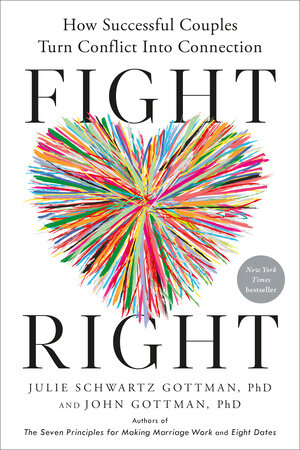
Fight Right

Julie Schwartz Gottman and John Gottman, couples researchers and clinicians.

  • 4.5
  • 6.3K ratings
  • 92% gave 4 or 5*
What it’s for
A whole book on how to argue, and on what the arguments are really about.
What it’s not for
A quick overview. It's a full book about conflict.
See the book

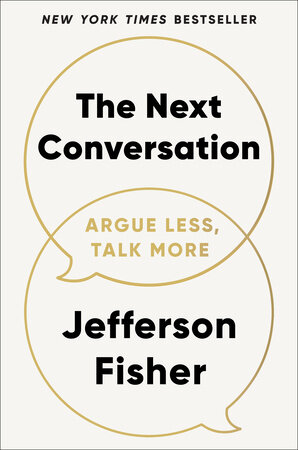
The Next Conversation

Jefferson Fisher, a Texas trial lawyer who teaches communication.

  • 4.3
  • 18K ratings
  • 84% gave 4 or 5*
What it’s for
Words for the moment itself: how to stay steady, say it, and not get pulled in.
What it’s not for
Couples specifically. It covers everyday conversations too.
See the book

Follow

On Instagram

Small daily reminders in your feed.

@thesecurerelationship

Julie Menanno

The Secure Relationship. A licensed therapist, by the account's own site.

  • 1.5M followers
  • 1.7K likes a post*
What it’s for
The loop two people get into, and how to get back to each other.
What it’s not for
A full guide. These are short posts on relationship patterns.
See the account
@therapywithhannab

Hanna Basel

A clinical social worker, certified in emotionally focused therapy.

  • 38K followers
  • 188 likes a post*
What it’s for
Why a partner shuts down, and why explaining turns into an argument.
What it’s not for
A full guide. These are short posts on relationship patterns.
See the account

Follow

On TikTok

Quick clips, in your feed.

@justaskjefferson

Jefferson Fisher

A Texas trial lawyer who teaches communication, not a therapist.

  • 1.7M followers
  • 1K likes a post*
What it’s for
Short clips on what to say when an argument starts.
What it’s not for
Couples specifically. It covers everyday conversations too.
See the account
@melissaparkssays

Melissa Parks

A clinical social worker, certified in emotionally focused therapy.

  • 129K followers
  • 35 likes a post*
What it’s for
The loop explained without blame.
What it’s not for
A feed only about couples. Topics also include individual experiences.
See the account

The science

Three studies worth knowing

If you want to see what researchers actually found.

Journal of Personality and Social Psychology · 2019Communication That Is Maladaptive for Middle-Class Couples Is Adaptive for Socioeconomically Disadvantaged CouplesRoss, Karney, Nguyen and Bradbury

Pulling back went with lower satisfaction in better-off couples, but with higher satisfaction in couples with less money.

  • 946 couples, up to 27 months
  • cited by 53*
What it’s for
A reminder that the same pattern can mean different things in different lives.
What it’s not for
Advice on what to do. It looks at patterns over time, mainly through wives' satisfaction.
Read the study

From us

Our own articles

These are ours, so count them as our view.

How did these get on the list?

We looked at what’s out there on this topic, what a lot of people have watched, read or listened to, and what many of them liked. Then we checked each one.

This list isn’t complete. There’s a lot more good stuff out there. If you know something we should add, write to us at hello@lovlov.co.

We can’t tell you whether any of this will work for you, but we’d love to hear what did.

* Numbers as of 4 November 2026. Podcast ratings come from Apple Podcasts and cover the whole show, because listener numbers aren’t public. Book ratings come from Goodreads. We don’t check how those ratings came about. Likes per post are the median of recent posts, and citations come from Crossref.

What lovlov isn’t

  • It doesn’t diagnose you or your partner, or replace therapy.
  • It doesn’t provide crisis support or trauma treatment.
  • It’s not a medical device.

If you don’t feel safe, or you’re not sure, here’s where to turn →